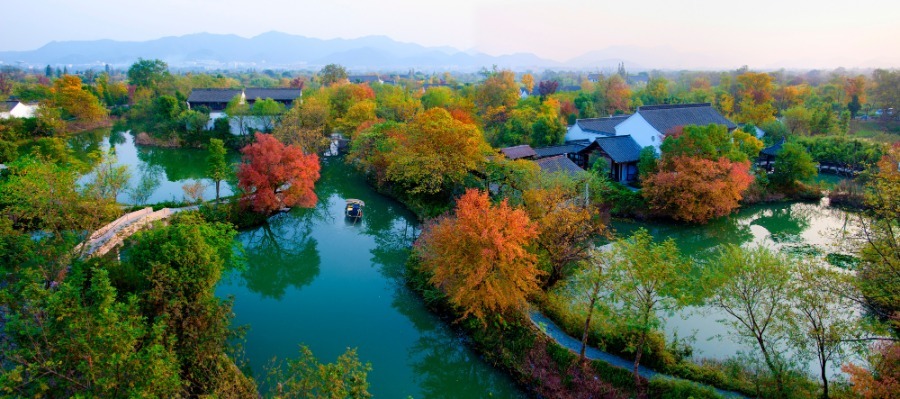
Xixi National Wetland Park
Introduction
Xixi National Wetland Park is a renowned ecological site located in the western part of Hangzhou, Zhejiang province. It plays a pivotal role in the local ecosystem and is celebrated for its rich biodiversity and significant cultural heritage. The park is an amalgamation of ecological protection and leisure tourism, making it a popular destination for both environmental enthusiasts and tourists seeking tranquility and beauty.
Geography and Environment
The park spans an area of approximately 11.5 square kilometers and is characterized by its vast network of waterways, including streams, ponds, lakes, and swamps. Water bodies constitute nearly 70% of the park's total area, with six major rivers weaving through the intricate landscape. These waterways extend over 100 kilometers, supporting a diverse array of aquatic and terrestrial life. The park's lush vegetation includes reeds, willows, and persimmon trees, which provide habitat for a wide variety of fauna, making it an excellent location for bird watching and wildlife observation.
Historical Background
Xixi's history dates back centuries, with its natural beauty and idyllic landscape being appreciated by ancient Chinese civilizations. It was considered a place of seclusion and elegance, drawing the admiration of emperors and scholars alike. A notable story from 1127 recounts Emperor Gaozong of the Southern Song Dynasty (1127-1279) passing through Xixi and contemplating making it the new capital due to its captivating scenery. Although persuaded otherwise, his remark, "One will hate to leave Xixi when indulged by the beautiful scenery here", has become a slogan for the park, encapsulating its timeless allure.
Modern Development and Conservation Efforts
Established as China's first national wetland park in 2005, Xixi has undergone extensive ecological restoration to preserve its natural and cultural resources. The restoration project, initiated in 2003 by the Hangzhou government, was a response to past industrial activities that had adversely affected the wetland. The project focused on prioritizing ecology, respecting local culture, maintaining the original landscape, and ensuring sustainable development. Efforts included the revival of traditional folk activities such as dragon boat racing and the lantern festival, enhancing the park's cultural value.
Educational and Research Opportunities
The park serves as a platform for scientific research and education, attracting researchers and students interested in studying wetlands, biodiversity, and ecological conservation. The National Wetland Museum of China, located within the park, further enhances its educational value. Founded in 2009, the museum houses extensive collections related to wetland ecosystems and offers interactive exhibits that educate the public about the importance of wetlands.








